Sunlight and Slopes: How Calculus Is Powering a New Generation of Clean Energy Thinkers

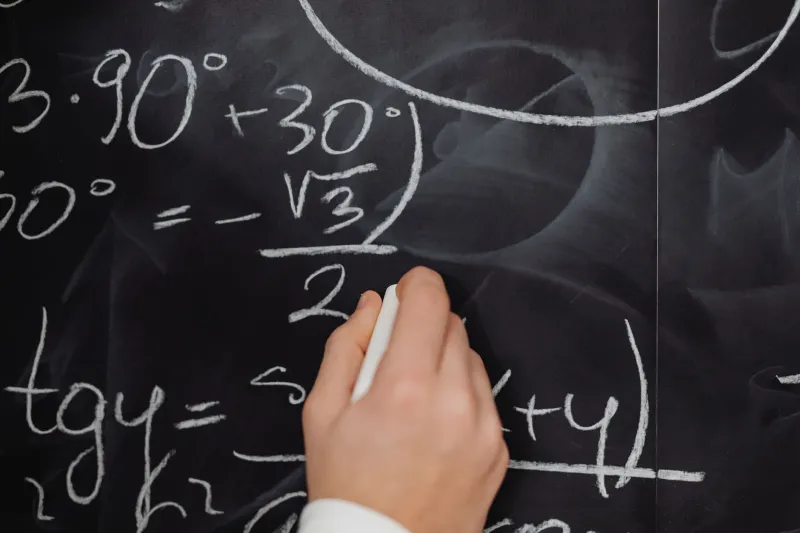
For many high school students, calculus arrives as a subject defined by abstraction—curves on a coordinate plane, limits approached but never quite reached, and rules memorized for an exam that feels disconnected from anything beyond the classroom door. Yet in schools from Arizona to Massachusetts, a pedagogical shift is underway. Teachers are anchoring calculus instruction in one of the most urgent applied sciences of our time: solar energy. The result is a model of mathematics education that is both rigorous and immediately relevant.
Why Solar Energy Makes Calculus Tangible
Photovoltaic systems are, at their core, mathematical objects. The power output of a solar panel changes continuously with the angle of incoming sunlight, ambient temperature, shading conditions, and the time of day. Modeling that output requires precisely the tools that appear in a standard AP Calculus or dual-enrollment course: derivatives to describe rates of change, definite integrals to calculate total energy produced over a given interval, and optimization techniques to determine the panel orientation that maximizes efficiency.
When a student is asked to find the maximum power output of a rooftop array during a school day, the question is no longer hypothetical. The derivative is not merely a slope on a graph—it is the rate at which energy production is increasing as the sun rises, or declining as clouds move in. That conceptual grounding, educators report, changes the texture of student engagement in measurable ways.
"The moment students realize they are solving a real problem—one that has dollar values and environmental consequences attached to it—the mathematics stops feeling arbitrary," says one calculus instructor at a public high school in Albuquerque, New Mexico, whose students have spent the past two years collecting irradiance data from a small array installed on the school's gymnasium roof.
Programs Bringing the Model to Life
Several structured programs across the country have formalized this approach, offering frameworks that other schools can adopt or adapt.
The Solar Energy Education Fund's Student Design Challenge, active in several Sun Belt states, invites teams of students to design a solar installation for a hypothetical community building. Participants are required to submit a written analysis that includes integral-based calculations of projected annual energy yield, a cost-benefit comparison using optimization methods, and a sensitivity analysis showing how output varies with panel tilt angle. Judges evaluate both the mathematical rigor of the submission and the clarity of the written argument—reinforcing that quantitative reasoning and communication are inseparable skills.
In the Midwest, a consortium of rural school districts in Iowa and Illinois has partnered with regional community colleges to offer a semester-long elective called Applied Mathematics for Sustainable Systems. The course uses actual utility data from local wind and solar installations, requiring students to build integral models that estimate monthly kilowatt-hour production and compare those estimates against metered output. The discrepancy between model and measurement becomes its own lesson: a conversation about assumptions, error analysis, and the humility that good science demands.
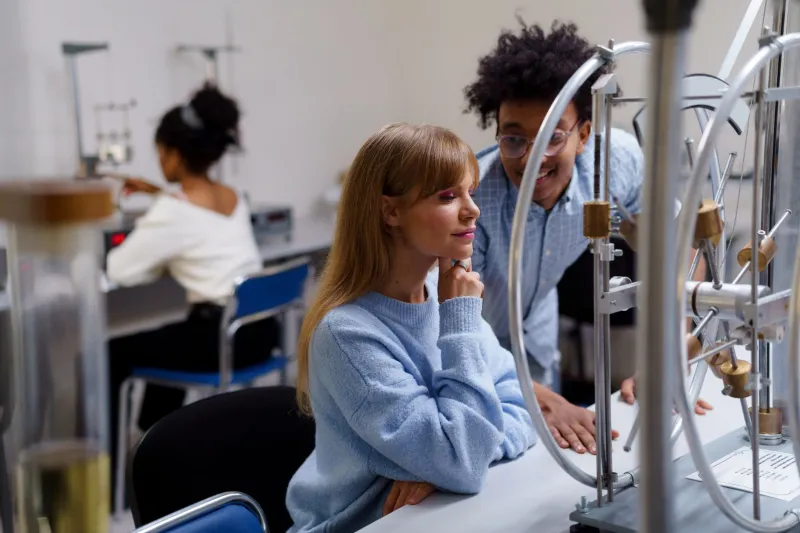
Meanwhile, the National Science Foundation's Innovative Technology Experiences for Students and Teachers (ITEST) program has funded several university-led initiatives in which high school juniors and seniors collaborate with engineering undergraduates on solar modeling projects. These partnerships, active at institutions including Arizona State University and the University of Massachusetts Lowell, expose younger students to professional-grade simulation software while reinforcing the calculus concepts they are simultaneously studying in their home schools.
The Mathematics Behind the Mission
It is worth examining what the mathematics actually looks like in these classroom contexts, because the sophistication of the work often surprises outside observers.
A typical student project might begin with a dataset of solar irradiance values—measured in watts per square meter—recorded at fifteen-minute intervals over the course of a clear day. Students are asked to approximate total solar energy received per unit area using Riemann sums, then refine that estimate using the trapezoidal rule or Simpson's rule, connecting numerical integration techniques to the definite integral they have studied analytically. From there, they apply panel efficiency ratings (expressed as a percentage) and surface area measurements to convert irradiance into projected electrical output.
Optimization enters when students investigate tilt angle. Using a simplified irradiance model that treats the sun's position as a function of time and latitude, they differentiate the power function with respect to tilt angle and set the derivative equal to zero—a classical optimization problem, but one whose solution carries genuine engineering meaning. In some programs, students then test their theoretical optimum against physical measurements taken with adjustable panel mounts, closing the loop between abstract calculus and observable reality.
This layered approach—numerical methods, analytical calculus, and empirical verification—mirrors the workflow of practicing engineers and applied scientists in ways that textbook exercises rarely do.
Civic Preparation as a Mathematical Outcome
Beyond the intellectual development of individual students, these programs carry a broader civic argument. The United States has set ambitious targets for expanding renewable energy capacity over the coming decades. Meeting those targets will require not only engineers and scientists, but also informed citizens, policymakers, local officials, and business leaders who possess enough quantitative fluency to evaluate proposals, scrutinize claims, and make sound decisions under uncertainty.
High school students who have worked through the mathematics of solar panel optimization are better equipped to engage with that landscape as adults—whether or not they pursue technical careers. They have experienced, firsthand, how mathematical models are constructed, what assumptions they rest on, and how sensitive their conclusions can be to changes in input data. That kind of mathematical maturity is a civic asset as much as a professional one.
Educators in these programs are also attentive to equity. Solar energy projects have proven particularly effective in reaching students who have historically been underrepresented in advanced mathematics courses. The applied context provides an accessible entry point, and the collaborative structure of many project-based programs distributes cognitive labor in ways that allow students with different strengths to contribute meaningfully. Several teachers report that students who struggled with traditional calculus instruction have flourished when the same concepts appeared in a project setting.
Looking Forward
The integration of renewable energy applications into secondary mathematics instruction is not yet widespread, but the infrastructure supporting it is growing. Curriculum resources are increasingly available through organizations such as the American Solar Energy Society and through open-access repositories maintained by university engineering departments. Assessment frameworks developed by programs like those described above are beginning to circulate among teachers through professional networks and conferences.
For mathematics educators looking to deepen student engagement without sacrificing rigor, solar energy modeling represents a particularly well-suited vehicle. The underlying mathematics is authentically challenging, the real-world stakes are genuinely high, and the subject matter connects to questions that students—across regions, backgrounds, and career aspirations—increasingly recognize as central to the world they are inheriting.
Calculus, it turns out, is not merely a gateway to college. In the hands of a well-designed curriculum, it can also be a tool for understanding—and perhaps improving—the energy systems that power everyday life.