Folding the Future: Why Computational Biology's Greatest Breakthrough Is Outpacing the Mathematicians It Needs
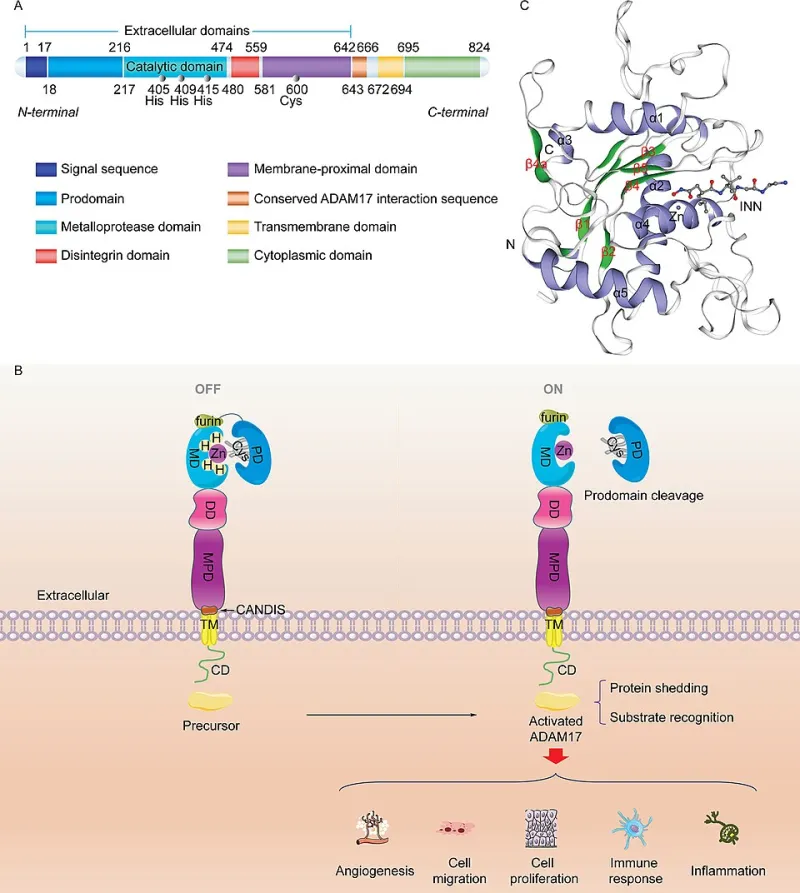
Photo: Wang K, Xuan Z, Liu X, Zheng M, Yang C and Wang H, CC BY 4.0, via Wikimedia Commons
A Scientific Watershed with an Unexpected Consequence
In 2020, DeepMind's AlphaFold 2 achieved something that had eluded biologists for half a century: it predicted the three-dimensional structures of proteins from their amino acid sequences with accuracy rivaling experimental methods. The scientific community responded with something close to awe. The Protein Data Bank, which had accumulated roughly 180,000 structures over five decades of painstaking laboratory work, was effectively supplemented overnight when AlphaFold released predictions for more than 200 million proteins.
For drug discovery, vaccine design, and the fundamental understanding of cellular machinery, the implications are profound. For the mathematics community, the implications are equally significant—and considerably more uncomfortable. AlphaFold and its successors are built on mathematical frameworks that most American math graduates have never encountered. The result is a widening gap between what computational biology urgently needs and what university mathematics programs are currently producing.
The Mathematics Inside the Molecule
To appreciate why structural biology is a mathematical discipline, one must understand what a protein actually is from a geometric perspective. A protein is a chain of amino acids that folds into a precise three-dimensional conformation. That conformation is not arbitrary; it is determined by the minimization of free energy across an extraordinarily complex landscape governed by electrostatic forces, hydrophobic interactions, and entropic constraints.
Describing protein geometry rigorously requires differential geometry—the branch of mathematics concerned with curved surfaces and manifolds. The Ramachandran plot, a foundational tool in structural biology, maps the dihedral angles of a protein backbone onto a two-dimensional space that reflects the geometry of a torus. Understanding why certain angle combinations are sterically forbidden and others are energetically favored requires intuitions that come from studying curvature, geodesics, and Riemannian metrics.
Beyond geometry, protein structure prediction involves optimization over energy landscapes of extraordinary complexity. AlphaFold's architecture uses attention mechanisms derived from transformer models, but the physical intuitions that guided its design—and that researchers use to interpret and extend its outputs—draw heavily on variational calculus, convex optimization, and the mathematics of high-dimensional probability distributions.
For researchers attempting to move beyond prediction toward design—engineering novel proteins with specified functions—the mathematical demands become even more intensive. Inverse problems in structural biology require techniques from functional analysis and numerical methods that are typically reserved for doctoral programs in applied mathematics or physics.
A Talent Shortage with Real Consequences
Researchers working at the intersection of structural biology and computation describe a consistent frustration: the pool of candidates who combine biological intuition with genuine mathematical depth is vanishingly small.
Laboratories studying protein misfolding in diseases such as Alzheimer's and Parkinson's are attempting to use computational tools to identify therapeutic targets. Pharmaceutical companies racing to apply structure-based drug design to previously undruggable protein families are competing for the same narrow cohort of graduates. Startups developing AI-assisted molecular design platforms report that their most persistent bottleneck is not data or computing resources—it is human expertise.
The issue is partly structural. Biology departments train students to use computational tools without necessarily teaching the mathematics that underlies them. Mathematics departments produce graduates fluent in analysis and algebra who have rarely opened a biochemistry textbook. The interdisciplinary programs that might bridge this gap—biophysics, computational biology, mathematical biology—exist at a small number of elite research universities and serve a fraction of the students who could benefit from them.
Community colleges and regional universities, which serve the majority of American undergraduates, have almost no infrastructure for this kind of training. Students at these institutions who might possess the aptitude and interest to contribute to computational biology face curricula that offer no pathway into the field.
What Curriculum Reform Could Accomplish
The good news is that the mathematical prerequisites for contributing to structural biology, while genuine, are not impossibly remote from existing undergraduate curricula. A targeted sequence of courses could prepare students for meaningful work in computational biology without requiring them to complete a traditional mathematics PhD.
Differential geometry is the most critical gap. Currently, this subject is typically taught as an advanced graduate course with prerequisites in topology and real analysis. A more accessible version—one that emphasizes computational and visual intuition alongside formal rigor—could be introduced at the advanced undergraduate level for students in mathematics, physics, or quantitative biology programs. Several textbooks and open-source resources already exist that take this approach; the obstacle is institutional inertia rather than pedagogical impossibility.
Optimization theory, including convex analysis and gradient-based methods, is increasingly taught in data science and machine learning programs. Connecting these courses explicitly to physical chemistry and structural biology applications would cost little in terms of curriculum revision and would significantly expand students' awareness of the field's opportunities.
Perhaps most importantly, universities should encourage genuine collaboration between mathematics and biology departments at the undergraduate level—joint seminars, co-advised research projects, and degree tracks that satisfy requirements in both disciplines. The National Science Foundation has funded several such initiatives, but their scale remains modest relative to the need.
The Broader Argument for Mathematical Biology
The protein folding story is one instance of a broader pattern. Across the life sciences, the most consequential advances of the coming decade will emerge from the intersection of rigorous mathematics and biological data. Cryo-electron microscopy, single-cell genomics, and systems biology all present mathematical challenges of comparable depth and urgency.
American universities have a competitive advantage in mathematics education that has historically translated into scientific leadership. Preserving that advantage in an era of computational biology requires deliberate investment in curriculum development, faculty hiring across disciplinary boundaries, and outreach to students who do not yet know that the mathematics they are studying could one day help design a drug that treats a disease affecting millions of people.
The proteins are folding. The question is whether American mathematics education will fold with them—or rise to meet the moment.