More Than a Headcount: Why America's STEM Strategy Is Measuring the Wrong Thing
Every few years, a new report lands with the familiar alarm: the United States is not producing enough STEM graduates. Committees convene, funding bills are drafted, and school districts roll out initiatives designed to steer more students toward science and mathematics. The metric of success, almost invariably, is enrollment—how many students declared a STEM major, how many completed a calculus course, how many crossed a threshold that can be counted and reported.
But what if that metric is the wrong one entirely?
A growing number of educators, researchers, and career professionals are pushing back against what might be called the pipeline myth—the assumption that America's most pressing challenge in STEM is a shortage of interested students rather than a failure to meaningfully develop the talent already in the room.
The Enrollment Illusion
On paper, STEM enrollment has expanded significantly over the past two decades. According to data from the National Center for Education Statistics, the number of bachelor's degrees awarded in science and engineering fields has risen steadily, with computer science programs in particular seeing dramatic growth. By the numbers, the pipeline appears to be flowing.
Yet employers in advanced manufacturing, biotechnology, and computational research consistently report difficulty finding candidates prepared to contribute meaningfully from day one. Academic research labs struggle to retain promising undergraduates past their sophomore year. And attrition rates among students who initially declare STEM majors remain stubbornly high, particularly among women and students from underrepresented communities.
The gap between enrollment figures and workforce readiness suggests that counting heads at the door tells us very little about what happens once students are inside.
What the Numbers Don't Capture
Dr. Miriam Osei, a mathematics education researcher who has spent fifteen years studying undergraduate retention in STEM programs, frames the problem this way: "We have optimized for visibility. A student who signs up for pre-calculus gets counted. A student who quietly leaves a physics program in her junior year because she never once spoke to a professor outside of a lecture hall—she disappears from the data entirely."
That invisibility is precisely the issue. The metrics most commonly used to evaluate STEM pipeline health—enrollment numbers, declared majors, degree completions—are lagging indicators at best. They tell us where students started, not whether they were equipped to go anywhere meaningful.
What those numbers rarely capture is the texture of a student's experience: whether they had access to a mentor who took their questions seriously, whether they participated in genuine research before graduation, whether they could see themselves reflected in the careers they were supposedly being prepared for.
Mentorship as Infrastructure
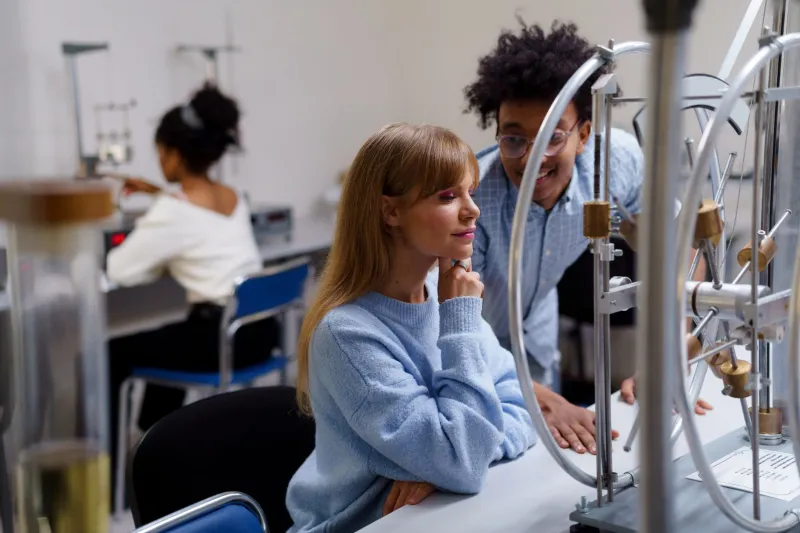
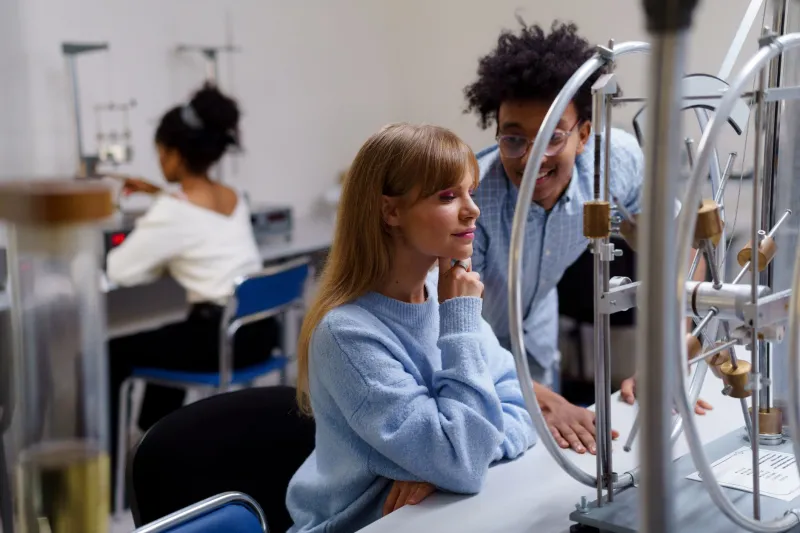
In conversations with high school and university educators across the country, one theme surfaces repeatedly: the students who persist in STEM, who go on to contribute substantively to research and industry, almost universally point to a specific person who made the difference. Not a curriculum. Not a program. A person.
"I can tell you the exact moment I became a scientist," said one undergraduate researcher at a midwestern public university. "It was when my advisor handed me a problem she didn't know the answer to and told me to figure it out. That had never happened to me before in twelve years of school."
This kind of mentorship—the kind that treats students as emerging colleagues rather than passive recipients of instruction—does not scale easily. It cannot be mandated by policy or replicated through a software platform. It requires time, institutional commitment, and a culture that values teaching as deeply as it values publication records.
Universities, under mounting pressure to demonstrate research productivity, have not always created conditions where that culture thrives. Large introductory science courses taught by rotating graduate instructors, limited undergraduate access to working laboratories, and advising systems stretched thin by high student-to-counselor ratios all work against the kind of relational investment that actually moves students forward.
Research Access as the Missing Variable
Beyond mentorship, early exposure to authentic research appears to be one of the strongest predictors of whether a student will remain in a STEM field. Programs like the NSF's Research Experiences for Undergraduates have demonstrated this for years, yet they remain dramatically underscaled relative to the number of students who could benefit.
The difference between a student who runs a pre-designed lab experiment and one who contributes to an open question—even in a small way—is not trivial. The former confirms what is already known. The latter introduces a student to the fundamental experience of science: uncertainty, iteration, and the particular satisfaction of advancing understanding by even a fraction.
High schools face an even steeper challenge. Advanced coursework in mathematics and science is distributed unevenly across the country, concentrated in well-resourced suburban districts and leaving rural and urban schools with fewer options. A student in rural Appalachia or inner-city Detroit may be just as capable as one in a well-funded suburban district—but if she has never had access to a science fair with real stakes, a summer program with working scientists, or a teacher who has ever set foot in a research institution, her trajectory will look very different.
Redefining What Success Looks Like
If enrollment is an insufficient measure, what should replace it? Educators and researchers have proposed several alternatives that better capture genuine development: persistence rates through intermediate coursework, participation in undergraduate or pre-college research programs, the quality and diversity of mentorship relationships, and longitudinal tracking of where graduates actually land five and ten years after completing their degrees.
Some institutions have begun experimenting with cohort models—deliberately small groups of students who move through foundational coursework together, supported by consistent faculty mentors and peer networks. Early results from these programs suggest that belonging and accountability matter enormously, particularly for students who arrive without the informal social capital that often smooths the path for their peers.
None of these approaches is cheap or easy to implement at scale. But the alternative—continuing to pour resources into the top of a leaky pipeline while measuring success by how many students entered rather than how many emerged prepared—is a strategy that has already shown its limits.
A Different Kind of Investment
America's long-term strength in science, mathematics, and technology will not be secured by enrollment campaigns alone. It will be built through sustained, deliberate investment in the conditions that allow students to become thinkers: mentors who have time to teach, research experiences that begin early and run deep, and career pathways made visible to students who have never had reason to imagine themselves in them.
The students are there. The question is whether the institutions charged with developing them are willing to be measured by something harder to count—and more honest about what STEM education is actually for.