Bending Without Breaking: How Topology and Systems Mathematics Are Shaping the Engineers Who Will Climate-Proof America
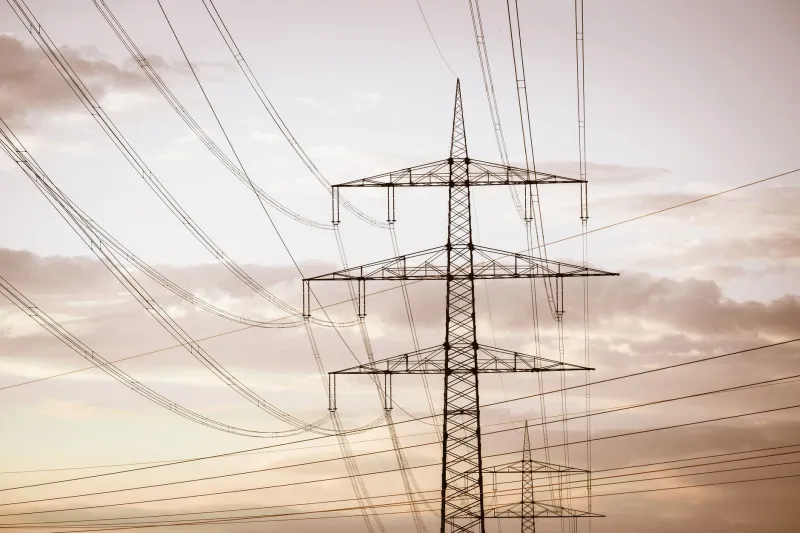
In August 2003, a software bug in an Ohio power company's alarm system triggered a cascade of failures that left 55 million people across the northeastern United States and Canada without electricity. The blackout lasted for days in some areas and cost an estimated $6 billion. Two decades later, climate scientists warn that extreme heat events, hurricanes, and wildfires are placing similar — and in many cases greater — stress on the same aging infrastructure. The question of how to design systems that can absorb those stresses without catastrophic failure has become one of the defining engineering challenges of the 21st century. And increasingly, the most powerful tools available for answering it come not from civil engineering textbooks but from branches of mathematics that most undergraduates never encounter: topology and network resilience theory.
What Topology Has to Do With Power Grids
Topology is the branch of mathematics concerned with properties of space that are preserved under continuous deformation — stretching, bending, and twisting, but not tearing or gluing. A topologist famously regards a coffee mug and a donut as equivalent objects because one can be continuously deformed into the other without cutting. At first glance, this seems comically abstract. In the context of infrastructure engineering, however, topological thinking offers something concrete and valuable: a framework for analyzing the connectivity and robustness of systems independent of their specific geometric configurations.
When engineers apply topological concepts to power grids, water distribution networks, or transportation systems, they are asking questions such as: How many independent paths exist between any two nodes in this network? What is the minimum number of components whose failure would partition the network into disconnected segments? How does the network's connectivity change as components are progressively removed — whether by storm damage, equipment failure, or cyberattack?
These questions have precise mathematical answers. A network with high algebraic connectivity — a property measured by the second-smallest eigenvalue of its Laplacian matrix — is mathematically more resilient to fragmentation than one with low algebraic connectivity. Engineers who understand this can design redundancy into systems deliberately, rather than relying on intuition or historical precedent.
Cascading Failures and the Mathematics of Interdependence
The 2003 blackout was not simply a failure of one component. It was a cascading failure — a phenomenon in which the failure of one node increases stress on adjacent nodes, some of which then fail, increasing stress further, in a self-amplifying process that can collapse an entire network far faster than any single point of failure would suggest. Cascading failures are a central concern in climate resilience planning because extreme weather events — a Category 4 hurricane, a multi-week heat dome, a wildfire that severs transmission lines — often deliver simultaneous shocks to multiple nodes across large geographic areas.
Researchers at Northeastern University, Argonne National Laboratory, and several other institutions have developed mathematical models of cascading failure that draw on percolation theory — a branch of probability and statistical physics that studies how connectivity in a network breaks down as components are randomly removed. Percolation theory predicts that many real-world networks have a critical threshold: below a certain fraction of functional nodes, the network abruptly loses its large-scale connectivity in a phase transition analogous to water freezing. Understanding where that threshold lies for a given infrastructure system is essential for designing interventions that keep the network safely above it.
For students interested in applied mathematics, this is a field where theoretical elegance and practical urgency converge. The same mathematical framework that describes percolation in a two-dimensional lattice can model the fragmentation of a regional power grid or a municipal water system under flood conditions.
Urban Systems and the Geometry of Resilience
Beyond energy infrastructure, topological and network-theoretic methods are being applied to urban planning in ways that are reshaping how American cities approach climate adaptation. Traditional urban design has optimized for efficiency — minimizing travel times, maximizing density, streamlining supply chains. Efficiency and resilience, however, are mathematically in tension. An efficient network tends to be a lean one, with few redundant pathways. A resilient network deliberately maintains redundancy, accepting some inefficiency as the price of robustness.
Researchers at the Santa Fe Institute and MIT's Senseable City Lab have used network analysis to study how urban street grids, transit systems, and supply chains respond to disruption. Cities with more grid-like street networks — higher in what network scientists call meshedness — tend to reroute traffic more effectively when roads are blocked by flooding or debris. Cities that depend on a small number of critical supply hubs are more vulnerable to disruption than those with distributed, redundant supply architectures.
These findings have direct policy implications. The Federal Emergency Management Agency (FEMA) and the Department of Energy's Office of Electricity have both incorporated network resilience metrics into updated infrastructure planning guidelines. Cities including Miami, Houston, and Phoenix — each facing distinct but severe climate pressures — are beginning to work with urban planners and applied mathematicians to redesign critical systems with resilience, not merely efficiency, as a primary objective.
Emerging Careers at the Intersection of Math and Climate
For students weighing career paths, the professional landscape at this intersection is expanding rapidly. The Bureau of Labor Statistics projects strong growth in several relevant fields through 2030, including operations research analysts, environmental engineers, and urban and regional planners — all roles that increasingly require sophisticated quantitative skills.
More specifically, several emerging specializations are worth students' attention:
- Grid resilience analysts work with utilities and regional transmission organizations to model failure modes in electrical networks and design hardening strategies, often using software tools built on graph-theoretic foundations.
- Climate risk modelers at insurance companies, municipal governments, and federal agencies use probabilistic network models to estimate the likelihood and financial impact of infrastructure failures under various climate scenarios.
- Sustainable urban systems designers combine topological analysis with geographic information systems (GIS) to plan transit networks, green infrastructure corridors, and distributed energy systems that maintain function under stress.
- Disaster logistics researchers apply network optimization to the problem of routing emergency supplies through partially damaged transportation systems — a problem that becomes more computationally complex, and more mathematically interesting, as the scale of the disaster increases.
Many of these roles are accessible through graduate programs in applied mathematics, operations research, civil and systems engineering, or urban planning. Undergraduate preparation in linear algebra, graph theory, probability, and differential equations provides a strong foundation. Students who supplement that foundation with coursework or independent study in topology and dynamical systems will find themselves unusually well prepared for work that is both intellectually demanding and societally consequential.
Building the Curriculum for a Resilient Future
Despite the urgency of climate infrastructure challenges, most undergraduate engineering and mathematics programs in the United States have been slow to integrate resilience-focused network analysis into their core requirements. Topology, where it is taught at all, is typically offered as an advanced elective for mathematics majors — disconnected from the applied contexts that give it its most compelling motivation.
This represents a curricular gap that educators, department chairs, and accrediting bodies have an opportunity to close. Introducing network resilience concepts at the undergraduate level — through case studies drawn from real infrastructure failures, through computational projects using publicly available grid and transportation data, and through interdisciplinary courses that bring together mathematics, engineering, and environmental science students — would better align academic preparation with the professional demands students will actually encounter.
The mathematics of resilience is not new. What is new is the scale and urgency of the problems it must address. Students who learn to think topologically about interconnected systems will be equipped not merely to understand those problems, but to solve them.